DN1–DN12, DN14 · South Yorkshire
Damp surveys in Doncaster. Find the cause first.
Low-lying land, a mining legacy and the River Don — damp here often starts outside.
We aim to reply within one working day.
- River Don
- Flood bank
- Past flood level
- High ground water
RICS-regulated firmPCA Qualified TechnicianFixed quote before you commit
- Coverage
- DN1–DN12, DN14
- Independence
- No treatment sold
- Output
- Written diagnosis
Independent investigation of rising damp, penetrating damp, condensation, mould and timber decay across Hyde Park, Balby, Wheatley, Bessacarr and the wider Doncaster area — from Mills Building Consultancy, which sells no damp-proofing or treatment of any kind.
Damp in Doncaster
How houses in Doncaster take on moisture.
01The housing stock
DN1–DN12, DN14+
Doncaster combines Victorian and Edwardian brick terraces around Hyde Park, Balby and Wheatley, larger houses in Bessacarr and Cantley, and former pit villages such as Armthorpe, Edlington and Rossington with colliery-era terraces and post-war housing, some of it non-traditional. Much of the land to the north and east is low-lying, around the Don and its tributaries.
02What this stock typically shows
Common causes+
In the low-lying areas, high ground water and flood history are an important part of the damp picture — parts of the borough, including Bentley and Fishlake, flooded in November 2019. Brick terraces typically show damp from raised external ground, leaking rainwater goods and failed pointing, often sold as rising damp. Condensation and mould on cold walls is common in post-war and non-traditional houses.
03What the survey involves
Evidence, not sales+
We distinguish between rising damp, penetrating damp and condensation — the step most damp diagnoses skip — using moisture profiling, a methodical look at external ground levels, rainwater goods and ventilation, thermal imaging where conditions suit, and timber decay checks. You get a written report explaining the actual moisture source, what needs doing and what doesn’t. Full scope: independent damp, mould and timber surveys
From the survey archive
What a damp investigation looks at.
An exposed damp-proof course, surface growth behind a WC, paving close to an air brick and a moisture check above a skirting board, from our survey archive. These are examples from our wider survey work, not photographs of a property in Doncaster.
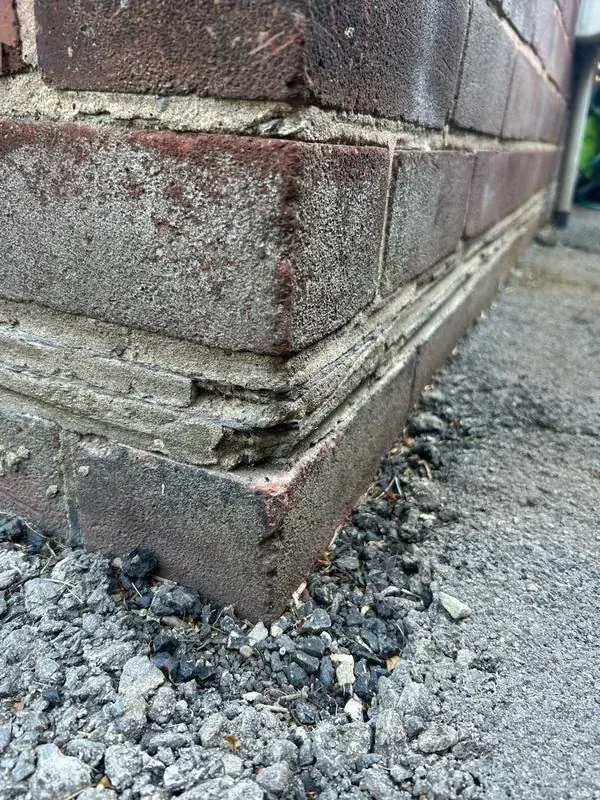
Exposed damp-proof course at a wall corner
An exposed layered damp-proof course at a brick corner, with weathered mortar and gaps along its edges.
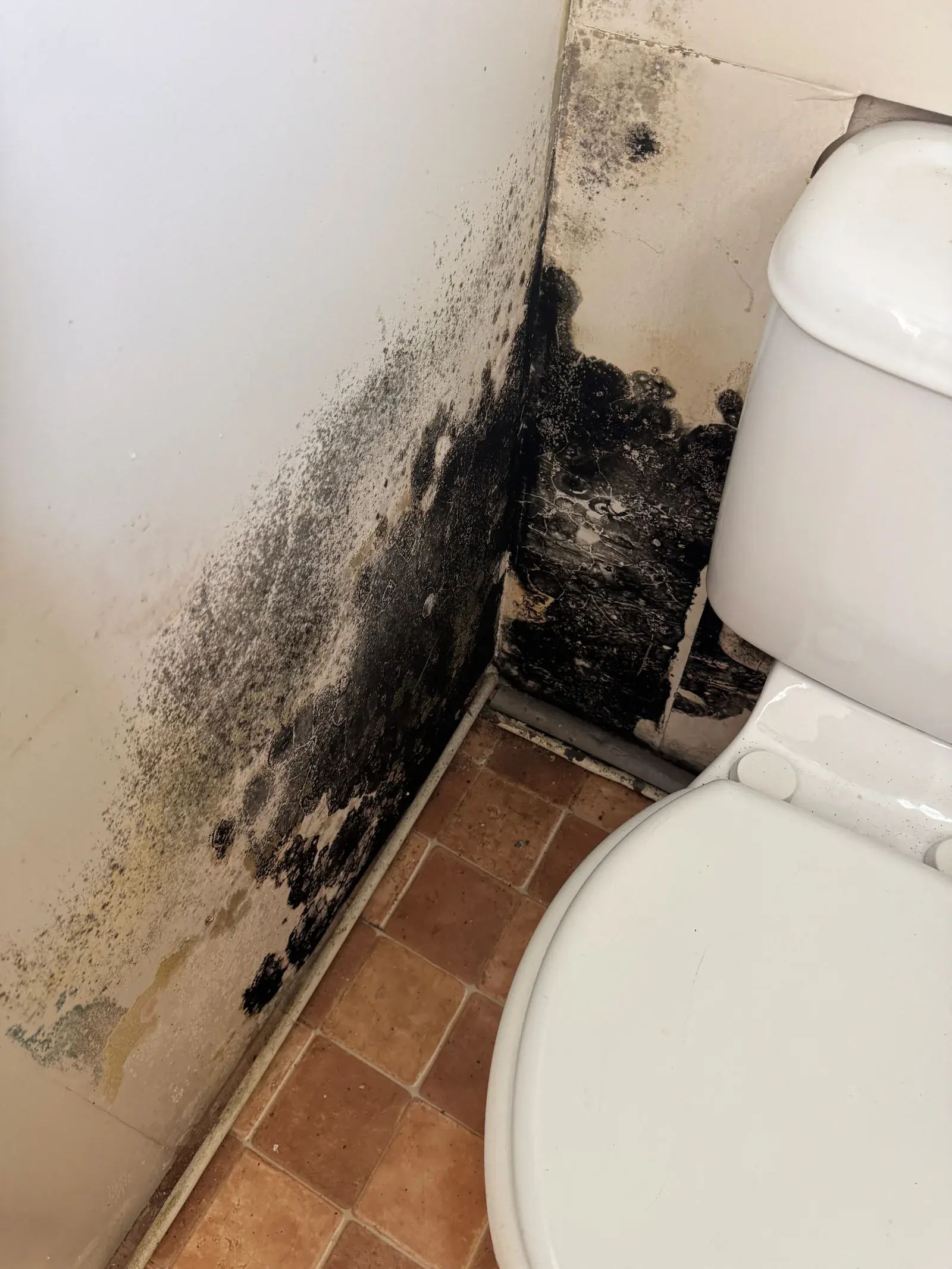
Dark surface growth behind a WC
Dense dark surface growth on the lower wall and corner behind the WC.
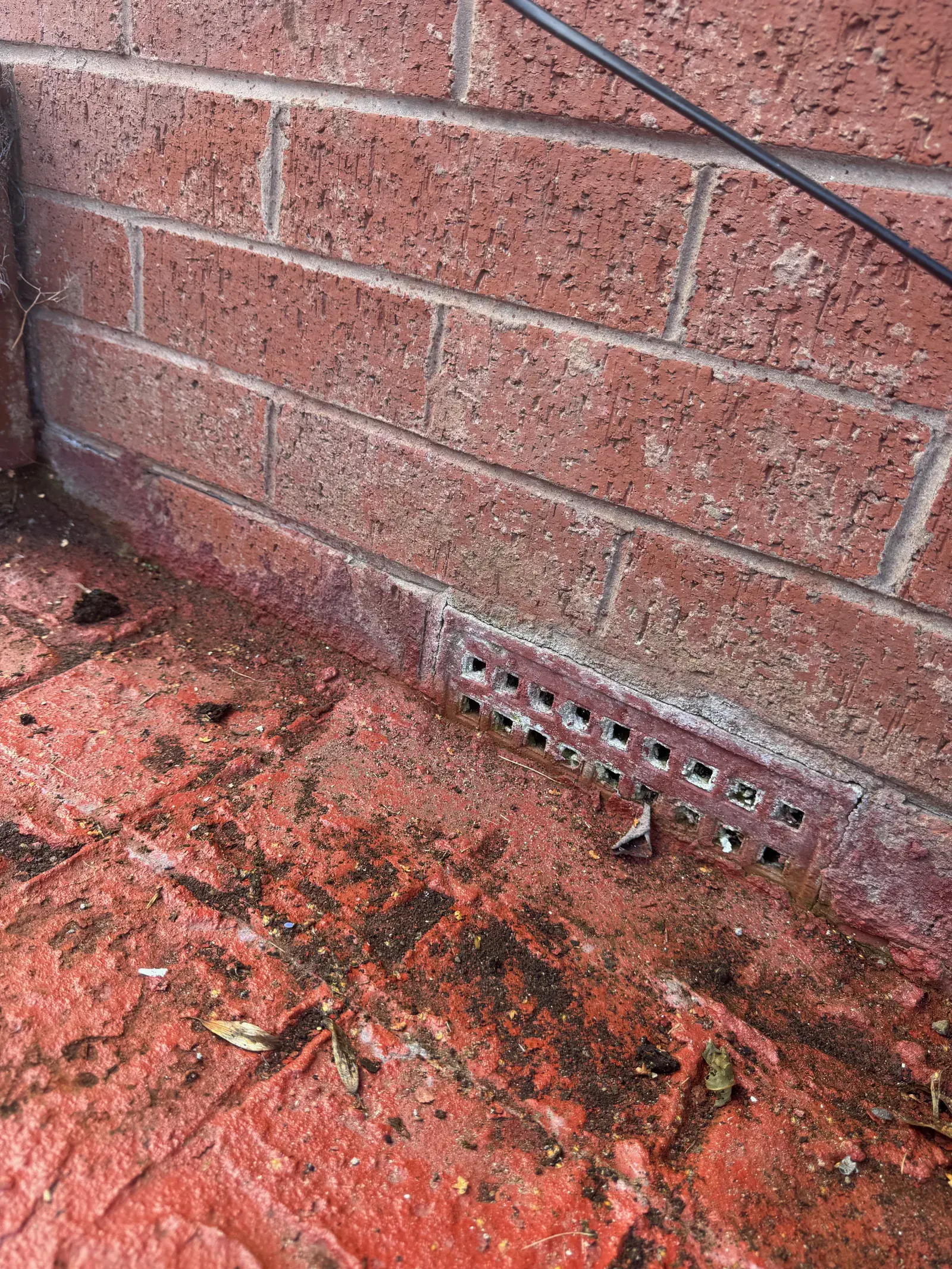
Paving close to an air brick
Paving close to the lowest air-brick openings, with little clearance above ground level.
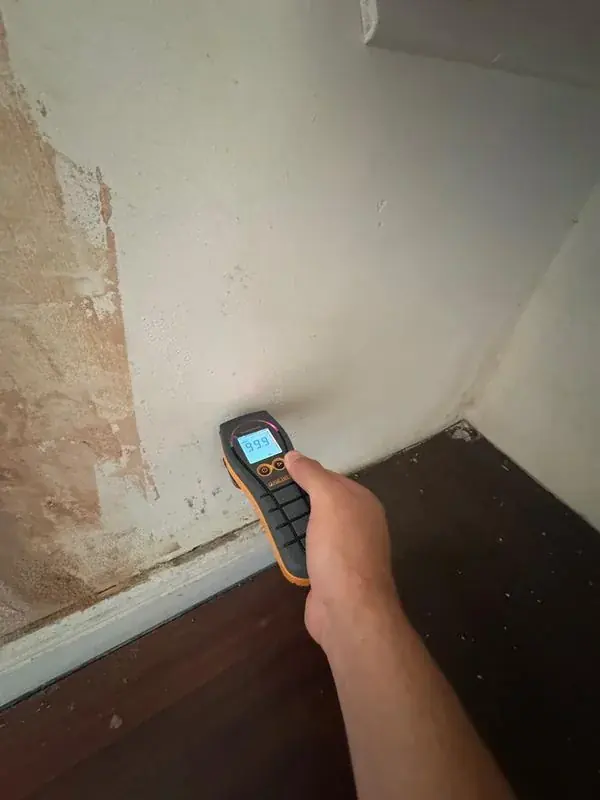
Moisture check above a skirting board
A moisture meter held against marked plaster above the skirting board.
Photographs from our survey archive.
Explore the full photograph collectionDamp proofing in Doncaster
Been quoted for damp proofing? Get the cause confirmed first.
Damp-proofing quotes are usually for one of three things: a chemical damp-proof course injected into the wall, tanking or a membrane, or hacking off and replastering with a salt-resistant plaster. Each has its place — but only when the cause really is the one it treats. In older solid-walled houses, damp is far more often rain getting in, ground or paving built up against the wall, leaking gutters and pipes, or condensation. None of those is cured by injection.
As an independent damp specialist we sell no treatment, so a survey from us tells you what the wall actually needs — sometimes the work quoted, often something simpler and cheaper. Before you sign, ask the contractor three questions: how was the cause diagnosed (an electrical meter on plaster is not proof of rising damp), what else was ruled out, and what exactly the guarantee covers.
Request a damp survey quote Or call 01484 218579
- Damp-proofing quote? How to get a second opinion
- Why use an independent damp surveyor
- What happens in a damp survey
- What a damp survey costs, and what it saves
- Moisture meter readings explained — why a meter alone can’t diagnose rising damp
- Humidity and dew point calculator — will your walls get condensation or mould?
Read before you pay for treatment
Many walls sold a damp-proofing treatment don’t need one. Try our damp checker, or start with telling the three types of damp apart, what rising damp really is, and how to treat damp walls by fixing the cause.
Letting a property, or managing lettings? See damp and mould investigations for landlords and letting agents.
Our clients review us on Google rather than on this site. Read our reviews on Google
Common questions · Doncaster
Asked before booking.
How much does a damp survey cost in Doncaster?
The fee is fixed for the property once we know the scope. In Doncaster that often depends on whether the house is low-lying or has flooded before, in which case the investigation looks at ground water, how the walls dried out and what repairs followed, alongside the usual checks of rainwater goods, pointing and ground levels. Non-traditional post-war houses need their construction identified first. We confirm the scope and a fixed quote in writing before you commit. We aim to reply within one working day.
Do I need damp proofing in Doncaster, or a damp survey first?
A survey first. Chemical injection only treats rising damp, and tanking is designed for walls below ground level; in low-lying or flood-affected houses the moisture is often coming from somewhere else entirely. An independent survey identifies the real source before money is spent.
Can you tell if damp in a Doncaster house is from past flooding?
We look for signs of previous flood water, how it was repaired and how the walls are drying. Your conveyancer’s searches and the insurer should confirm the property’s flood history.
Which areas of Doncaster do you cover?
DN1 to DN12 — including Hyde Park, Balby, Wheatley, Bessacarr, Bentley, Armthorpe, Thorne and Tickhill — plus Goole (DN14).
Damp in Doncaster?
Diagnose it before you treat it.
Tell us the address, the rooms affected and how long it has been going on. We confirm the right scope with you first — and we never sell the fix.
Fixed quote before you commit
We aim to reply within one working day.
- RICS-regulated firm no. 9317773
- The Property Ombudsman
- Professional indemnity insured
- Read our reviews on Google