Free tool · 60 checks · Printable
New build snagging checklist. Find it before the developer’s gone.
A room-by-room snagging list for a new-build home, from the brickwork to the paperwork.
Each check says what to look at and why it matters. Tick them off as you go, flag every snag you find, and send the flagged list to the developer in writing.
- 01Work through each room in order
- 02Flag every snag you find
- 03Print the list and report it in writing
Where to look
Each number matches a section of the checklist. Work round the outside first, then room by room.
The snagging checklist
Report these to the developer.
Nothing flagged yet. Press Snag on any check that found a problem and it will gather here, ready to print, photograph and send to the developer.
- ExternalBrickwork and mortar
- ExternalWeep vents
- ExternalRender and cladding
- ExternalRoof line and tiles
- ExternalGutters and downpipes
- ExternalDrainage and gullies
- ExternalPaths, patios and levels
- ExternalFences, gates and garden
- ExternalGarage
- Front door & windowsAlignment and operation
- Front door & windowsSeals
- Front door & windowsLocks and keys
- Front door & windowsTrickle vents
- Front door & windowsGlazing scratches
- Front door & windowsFrames and sills
- Front door & windowsFront door threshold
- Front door & windowsUpstairs windows
- Hall & stairsBalustrade fixings
- Hall & stairsGaps in the guarding
- Hall & stairsCreaking treads
- Hall & stairsHandrail
- Hall & stairsStairwell walls
- Hall & stairsHall floor
- Hall & stairsUnderstairs cupboard
- KitchenUnits, doors and drawers
- KitchenWorktop joints
- KitchenSealant and upstands
- KitchenSink and taps
- KitchenAppliances
- KitchenExtractor and ducting
- KitchenFloor and plinths
- BathroomsSealant
- BathroomsTiling and grout
- BathroomsFalls to the waste
- BathroomsExtractor fan
- BathroomsWater pressure and temperatures
- BathroomsWC
- BathroomsLeaks and access
- Bedrooms & livingPlaster finish
- Bedrooms & livingPaint
- Bedrooms & livingSkirting and architrave
- Bedrooms & livingDoors closing
- Bedrooms & livingSockets and switches
- Bedrooms & livingRadiators and heating
- Bedrooms & livingFloors
- Loft & servicesLoft insulation
- Loft & servicesFan ducting
- Loft & servicesParty wall and service holes
- Loft & servicesLoft hatch
- Loft & servicesBoiler and commissioning
- Loft & servicesConsumer unit
- Loft & servicesSmoke and heat alarms
- Loft & servicesMeters and stopcock
- PaperworkWarranty certificate
- PaperworkBuilding control certificate
- PaperworkEnergy Performance Certificate
- PaperworkGas and heating certificates
- PaperworkElectrical installation certificate
- PaperworkManuals and handover pack
- PaperworkAfter-sales contacts
Want a professional snagging inspection?
A checklist finds what you can see. A snagging inspection adds the roof space, insulation, ventilation and fire-stopping, and gives you a photographed defect schedule written for the developer’s customer care team. Mention your flags when you enquire.
Request a snagging survey quoteOr read what our snagging surveys cover.
- RICS-regulated firm no. 9317773
- The Property Ombudsman
- Professional indemnity insured
- We aim to reply within one working day.
- Read our reviews on Google
Timing · who fixes what
When to snag.
New-home warranties can change in scope over time. Check your certificate and policy for the builder-responsibility period, later insurance cover and any shorter reporting windows. Report known concerns promptly rather than waiting for the final deadline.
| When | Who puts it right | What to know |
|---|---|---|
| Before legal completion | The developer, ideally before you complete. | A developer registered with the New Homes Quality Board must give you the chance to carry out a pre-completion inspection, or to appoint a suitably qualified inspector. Issues that breach the warranty provider’s technical standards should be put right before legal completion where possible, or within 30 days. The inspection shouldn’t delay completion. |
| Years 1–2 after completion | The developer. | Under the New Homes Quality Code and the main warranties, the developer is responsible for putting right snags and defects in the first two years. Report issues in writing as soon as you find them, and always before the two-year period ends. |
| Years 3–10 | Your warranty provider. | After the developer’s period ends, you claim from the warranty provider instead. Cover is narrower — mainly physical damage to specified parts of the home such as the structure, roof, floors and drains — and the details vary by provider and policy. |
Reporting snags
Put it in writing.
- Use the developer’s process. Report through their customer care route, by email or letter, so every report is dated.
- Send one clear list. Number each snag, say which room and exactly where, and attach a photo. One complete schedule is harder to lose than a stream of messages.
- Keep a record. Note what you sent, to whom and when, plus every reply and appointment.
- Allow reasonable access and time. Then check each repair properly before signing anything off.
- Escalate if you need to. If you’re not satisfied, follow the developer’s complaints procedure. After that you may be able to use the warranty provider’s resolution service or, for developers registered with the New Homes Quality Board, refer the complaint to the New Homes Ombudsman. Past the developer’s two years, our page on new-build defects after two years sets out the warranty route and the evidence it needs.
Read more in our guide to snagging surveys and what new-build buyers need to know.
From the survey archive
Seals, fittings and fixings.
A gap at a glazing gasket corner, a safety-glass marking, a fine crack beside a door hinge, a broken hinge cover, a broken strip at a door threshold and roof trusses joined by connector plates, from our survey archive. They are examples from our wider survey work, not from one new home.
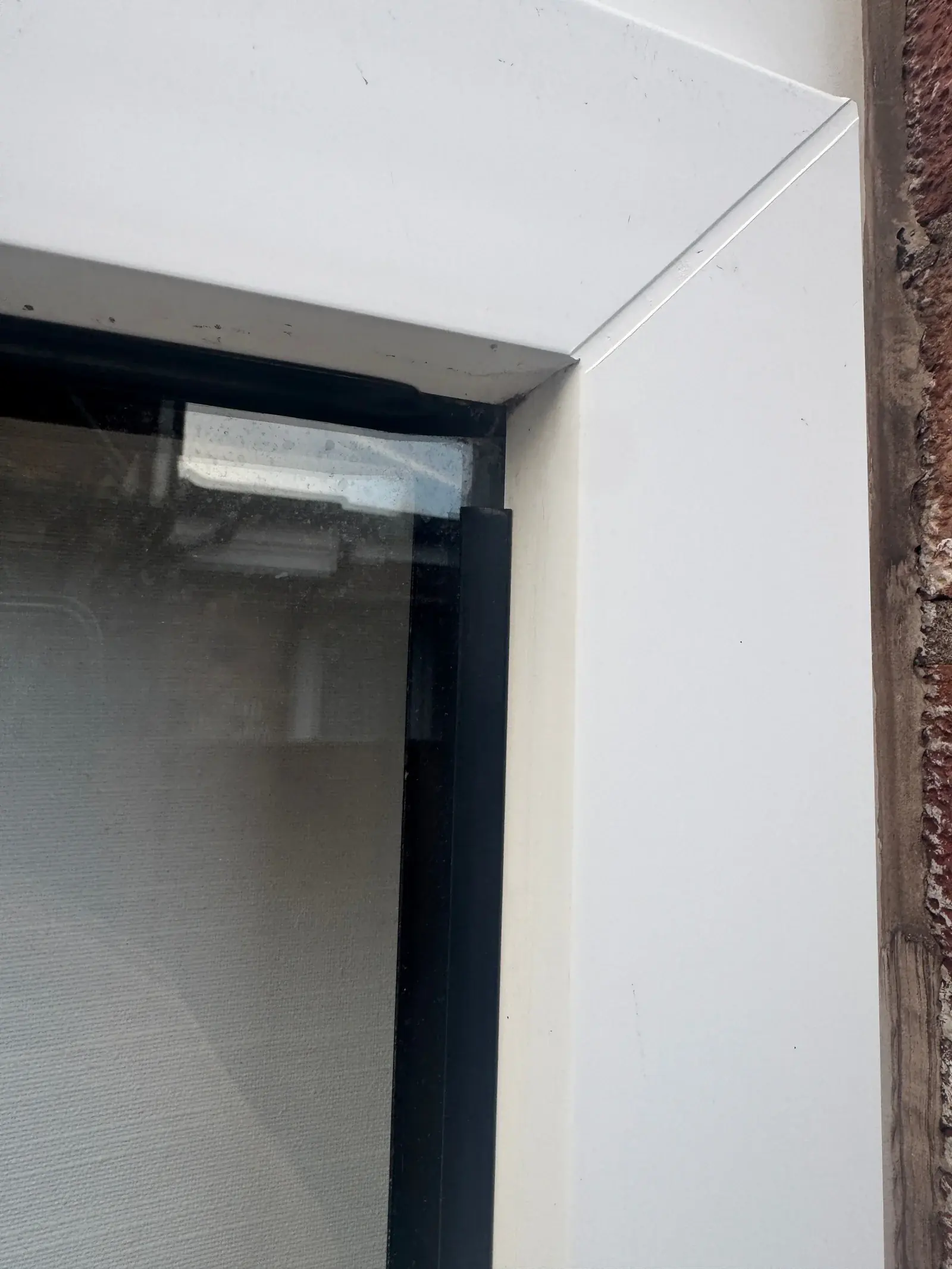
A gap at a glazing gasket corner
A gap where the black glazing gasket has pulled back from the frame corner.
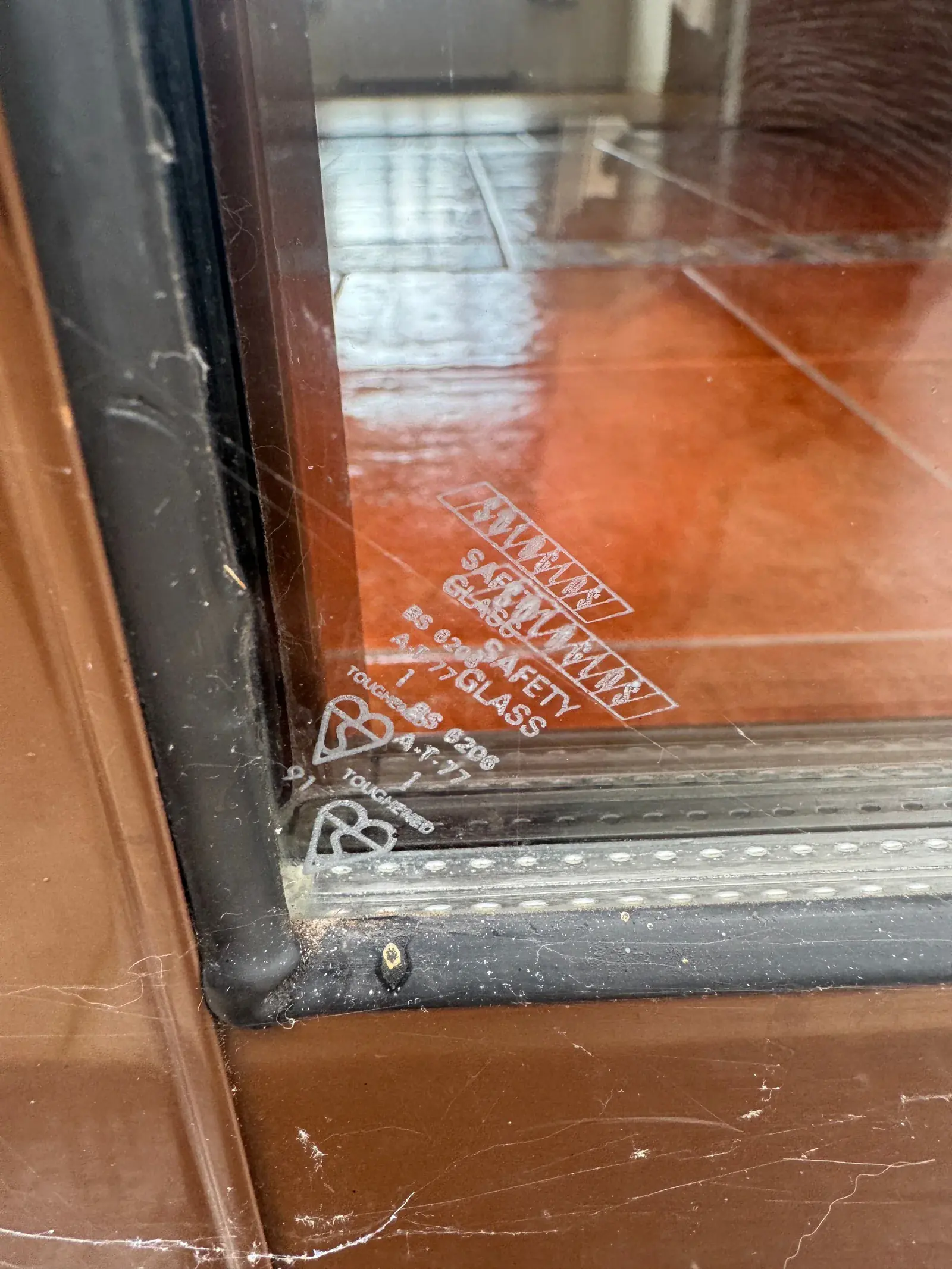
Safety-glass marking
A toughened safety-glass marking near the corner of a pane.
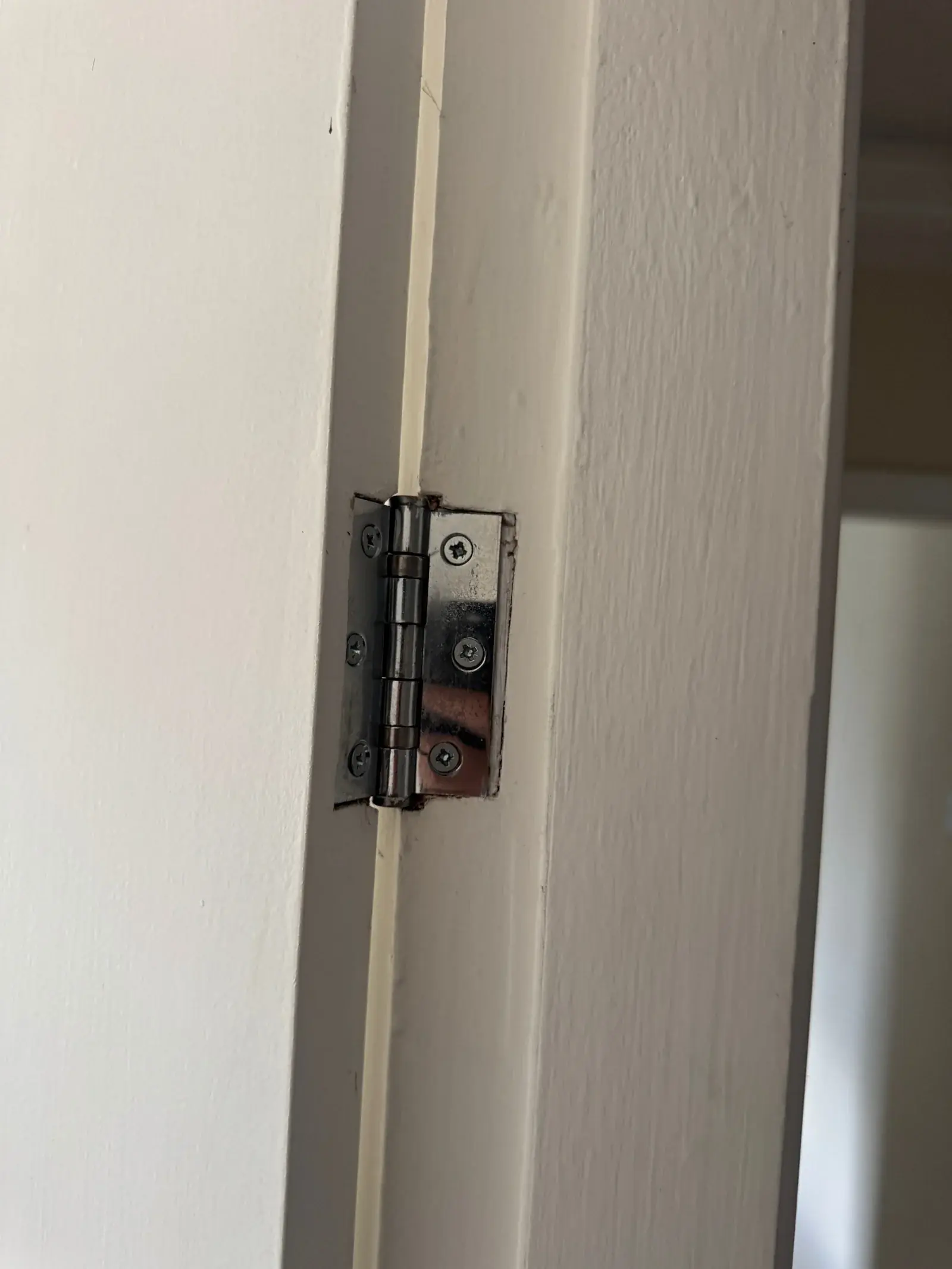
Cracking beside a door hinge
A fine crack extending up from the hinge recess in a painted door frame.
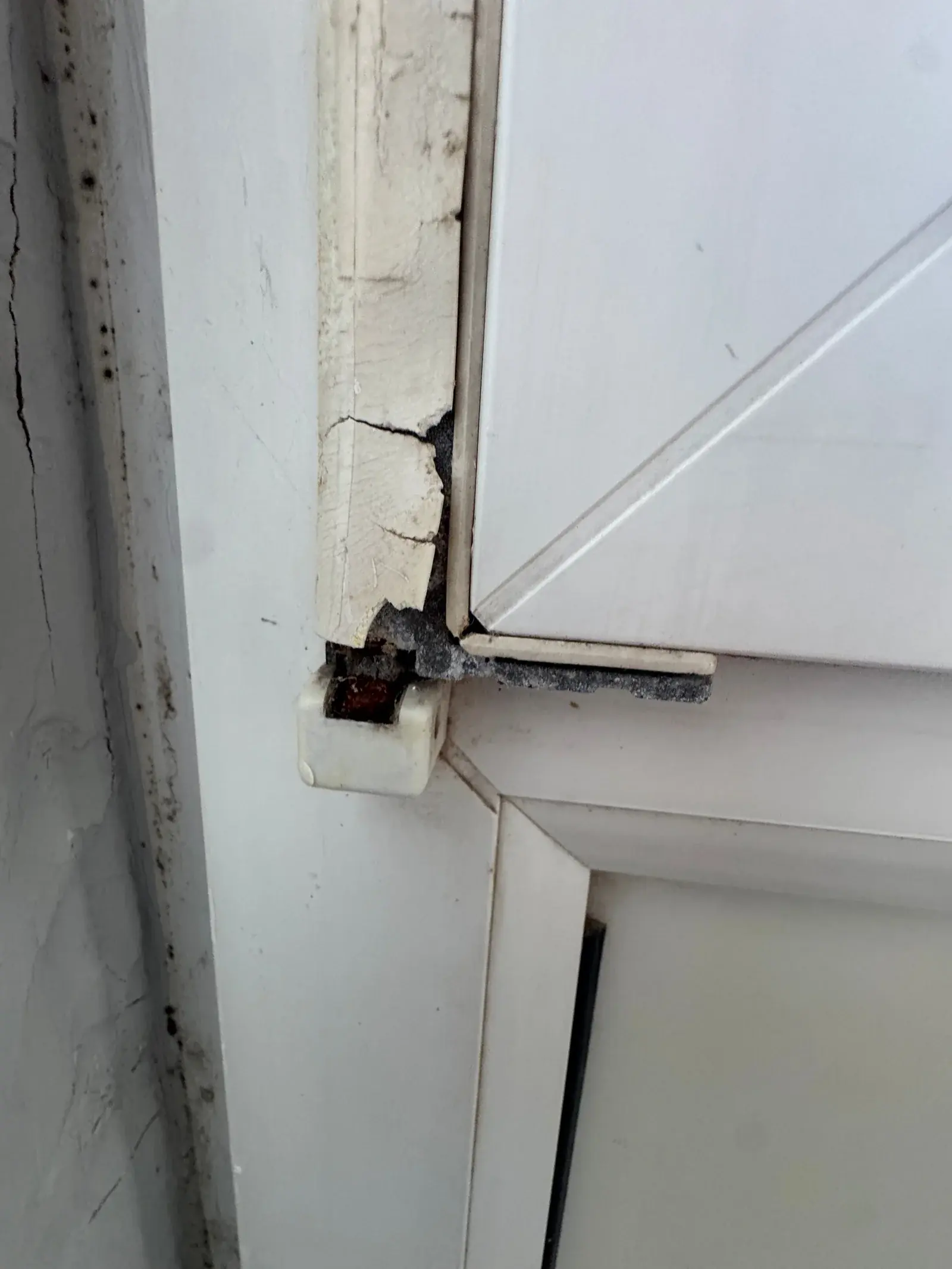
Broken door hinge cover
A broken door hinge cover exposing the metal fitting beneath.
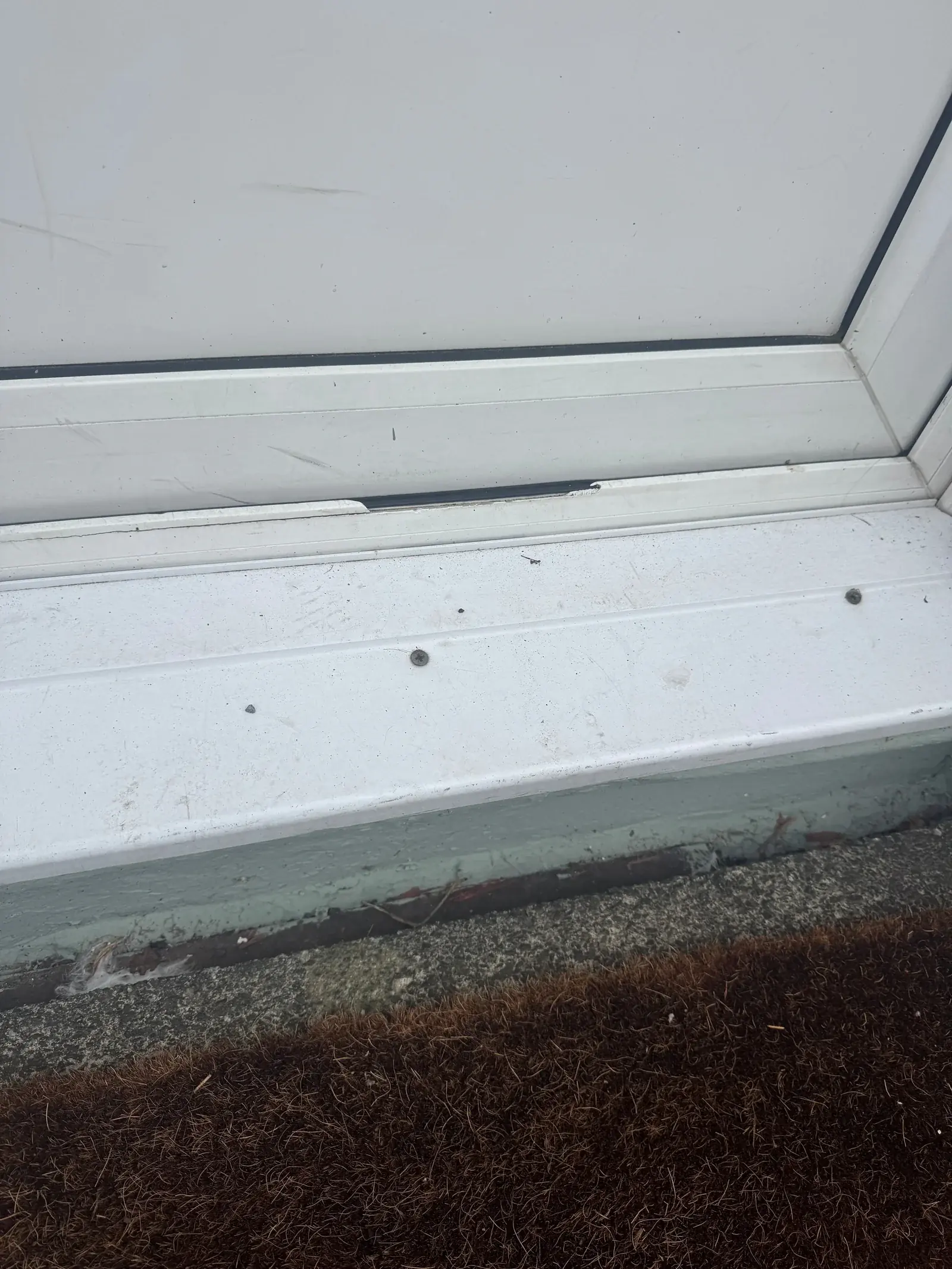
Broken strip at a door threshold
A broken strip along the lower door frame, exposing the dark seal beneath.
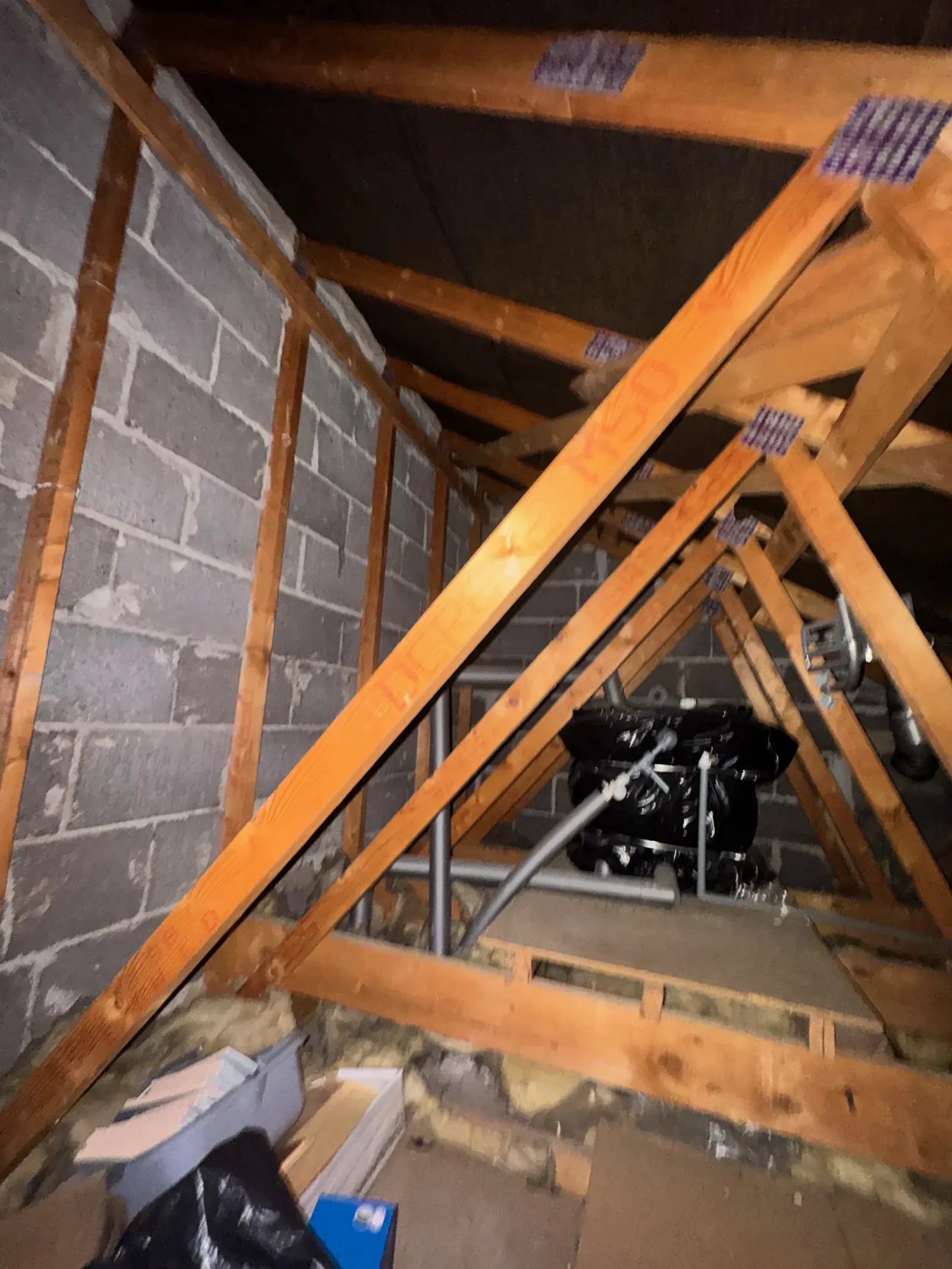
Timber roof trusses and connector plates
Timber roof trusses joined by metal connector plates.
Photographs from our survey archive.
Explore the full photograph collectionSettling in
Not every crack is a snag.
A new home holds a lot of water from its plaster, mortar and concrete. NHBC says it generally takes around nine months to a year to dry out. While it does, timber and plaster shrink, and fine cracks and small gaps in joinery are common. They are usually of constant width and not structurally significant.
The same water comes out as condensation. Keep trickle vents open, use the extractor fans and heat the house steadily rather than turning the heating right up. Our humidity and dew point calculator shows when your windows and cold walls are likely to run wet.
Wider, growing or stepped cracks, doors that start to bind, or damp that doesn’t ease are different — report them. Buying an older home next? Our house viewing checklist covers what to look for.
Common questions · snagging
Asked before handover.
What is snagging?
Snagging means finding and listing the defects in a newly built home — the “snags” — so the developer can put them right. They range from paint on the sockets and scratched glass to missing loft insulation, disconnected fan ducts and poorly fixed roof tiles. The list you send the developer is the snagging list.
When should I do a snagging inspection?
Ideally before legal completion, if the developer lets you in: it is the strongest position, and developers registered with the New Homes Quality Board must give you the chance of a pre-completion inspection. If not, do it as soon as you get the keys, before your furniture covers the floors and walls. Either way, do a final check a few months before the end of the developer’s two-year period, so nothing reportable is left behind.
Can I snag after moving in?
Yes. The developer is usually responsible for putting right snags and defects for the first two years — that is the builder warranty period in the main warranties, and the period the New Homes Quality Code covers. Report each issue in writing as soon as you find it. It is easier to show a defect was there from the start when it’s reported early, before your own wear and tear.
Does the developer have to fix snags?
In the first two years, the developer is responsible for putting right defects that don’t meet the warranty provider’s standards, and a developer registered with the New Homes Quality Board must also follow the Code’s after-sales and complaints process. If they don’t, you can escalate to the warranty provider’s resolution service or, for registered developers, the New Homes Ombudsman. Some fine shrinkage cracking is normal as a new home dries out and may be treated as maintenance, so check what your warranty says. This is a guide, not legal advice.
Should I snag it myself or use a professional?
This checklist will catch a lot, and plenty of buyers do their own. A professional snagging inspection adds the parts most people can’t judge or reach safely — the roof space, roof coverings, insulation, fire-stopping and ventilation — plus a photographed defect schedule written so the developer’s customer care team can work through it, and so items can’t be quietly dropped. It is worth considering if the home is large, you’re short of time, or the developer has already disputed what you’ve reported.
Share or link to this tool. It is free to use and needs no sign-up, so estate agents, conveyancers, landlords and local groups are welcome to link to it: www.millsbuildingconsultancy.co.uk/
Sources and further reading
Where this comes from.
- The New Homes Quality CodeNew Homes Quality Board.
- Part 2: Legal documents, information, inspection and completionNew Homes Quality Board.
- Part 3: After-sales service, complaints and the New Homes OmbudsmanNew Homes Quality Board.
- New Homes Quality Board: for homebuyersNHQB.
- Buildmark: in the first two years of the policyNHBC.
- Buildmark coverNHBC.
- Guide to your new homeNHBC.
- Building completion certificatesGOV.UK.
- Approved Document K: protection from falling, collision and impactGOV.UK.
Found more than you expected?
Get a professional snag list.
Tell us where you are — before completion, just moved in, or nearing the two-year mark — and we’ll confirm the scope and a fixed quote before you commit.
Fixed quote before you commit
We aim to reply within one working day.
- RICS-regulated firm no. 9317773
- The Property Ombudsman
- Professional indemnity insured
- Read our reviews on Google