Start here
A new home can look finished without every detail being right. A snagging inspection records the accessible condition of the property and identifies matters that need attention. Its value is not the length of the defect list: it is the quality of the evidence and how clearly it helps you take the next step.
- No fire-stopping
- Separating wall
Our snagging survey service explains the scope, reporting process and how to request a fixed quote across Yorkshire and the North West.
Contents9 sections
Choose the inspection for your stage
| Your position | What to arrange | What to check first |
|---|---|---|
| Waiting for the keys | Pre-completion inspection | Applicable code, developer access and completion timetable |
| Recently moved in | Post-completion snagging survey | Report visible damage promptly; confirm access to the home |
| Approaching a reporting deadline | Builder-warranty review | Policy dates, previous notifications and unresolved repairs |
A formal pre-completion inspection and a broader post-completion survey should not be treated as interchangeable. Confirm the scope in writing. The NHQB provides a defined pre-completion checklist; the applicable arrangements depend on the purchase. Its Code has different versions for reservations before and from 2 March 2026. Check the developer’s registration and the version relevant to your reservation.
An inspection is not permission to delay completion or withhold payment. Ask your conveyancer about the contractual consequences of any serious findings.
What is worth recording?
Some findings concern appearance: damaged joinery, uneven sealant or incomplete decoration. Others concern operation, such as a door that catches or a window that will not lock. Visible leakage, incomplete connections or signs of water entry need a different response from a small paint blemish.
A clear report separates:
- The observation: what was actually seen, where and under what conditions.
- The significance: why the item matters, without turning uncertainty into a diagnosis.
- The next action: repair, clarification, monitoring or further investigation.
- The limitation: what could not be accessed or established.
For example, a stain beneath a bathroom is evidence to investigate. A visual inspection alone may not establish the precise source or whether a concealed connection is currently leaking. The report should explain that distinction.
From the survey archive
Small details worth recording.
A glazing gasket gap, a safety-glass marking, cracking beside a door hinge and a broken hinge cover.
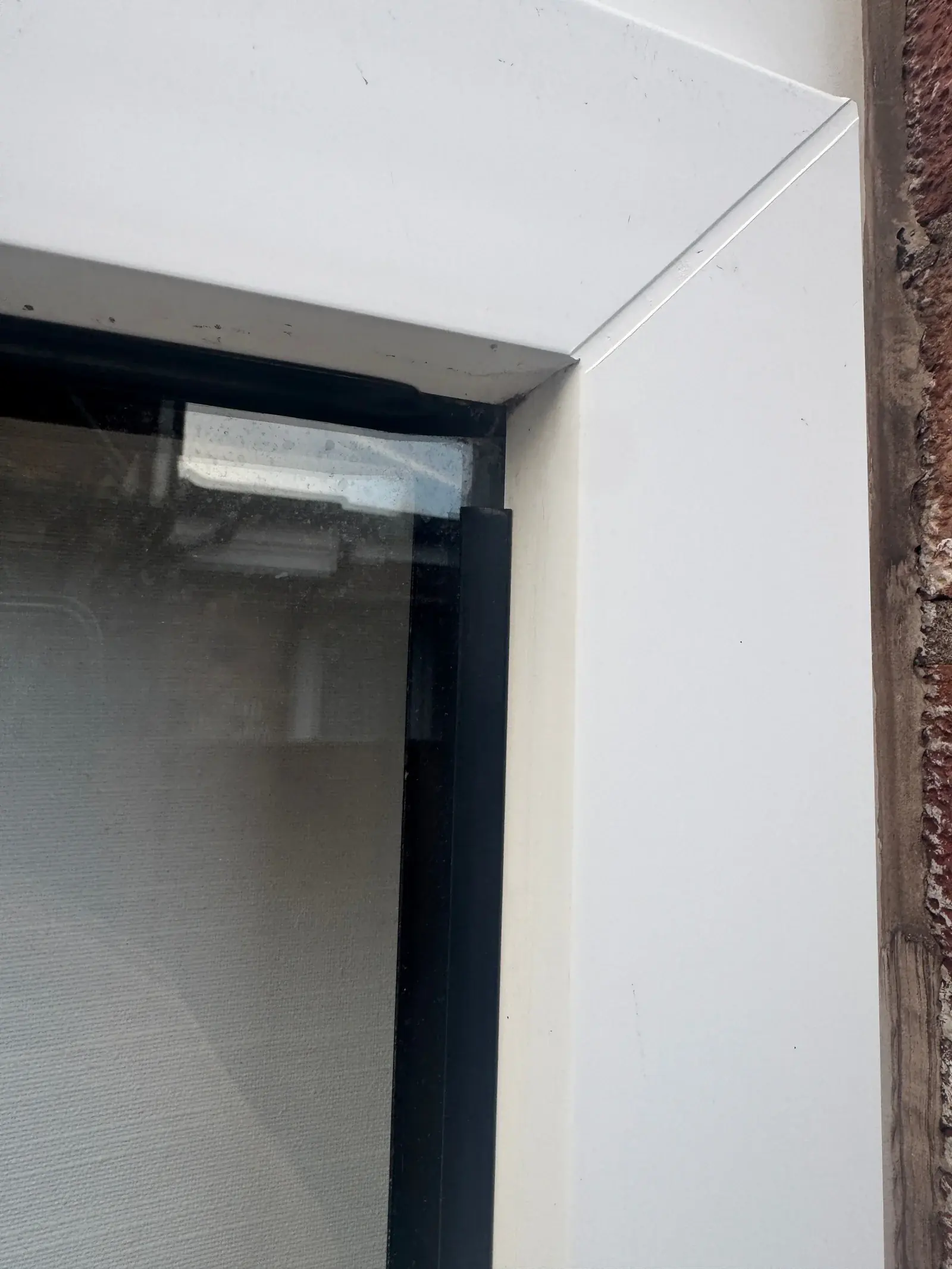
A gap at a glazing gasket corner
A gap where the black glazing gasket has pulled back from the frame corner.
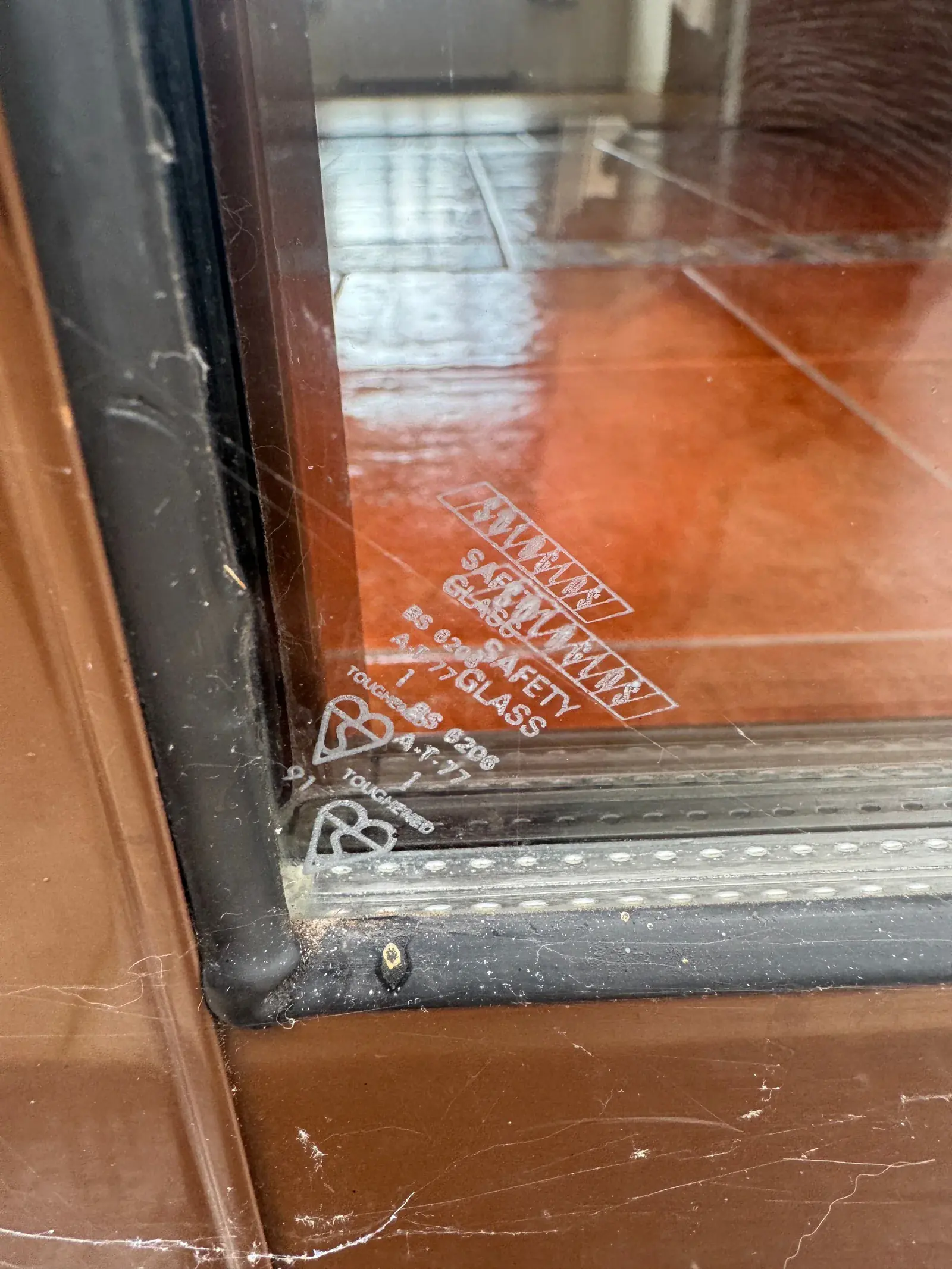
Safety-glass marking
A toughened safety-glass marking near the corner of a pane.
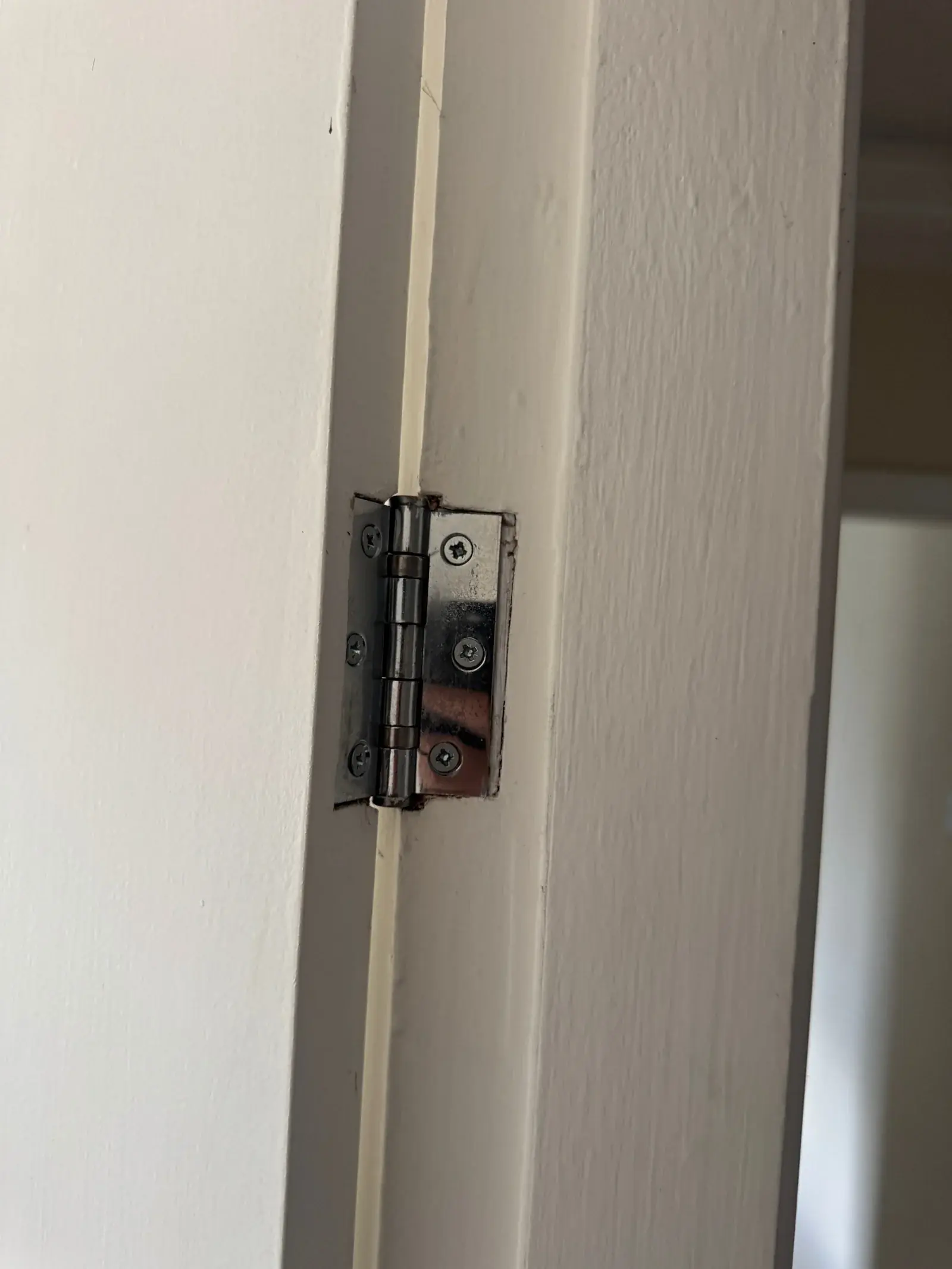
Cracking beside a door hinge
A fine crack extending up from the hinge recess in a painted door frame.
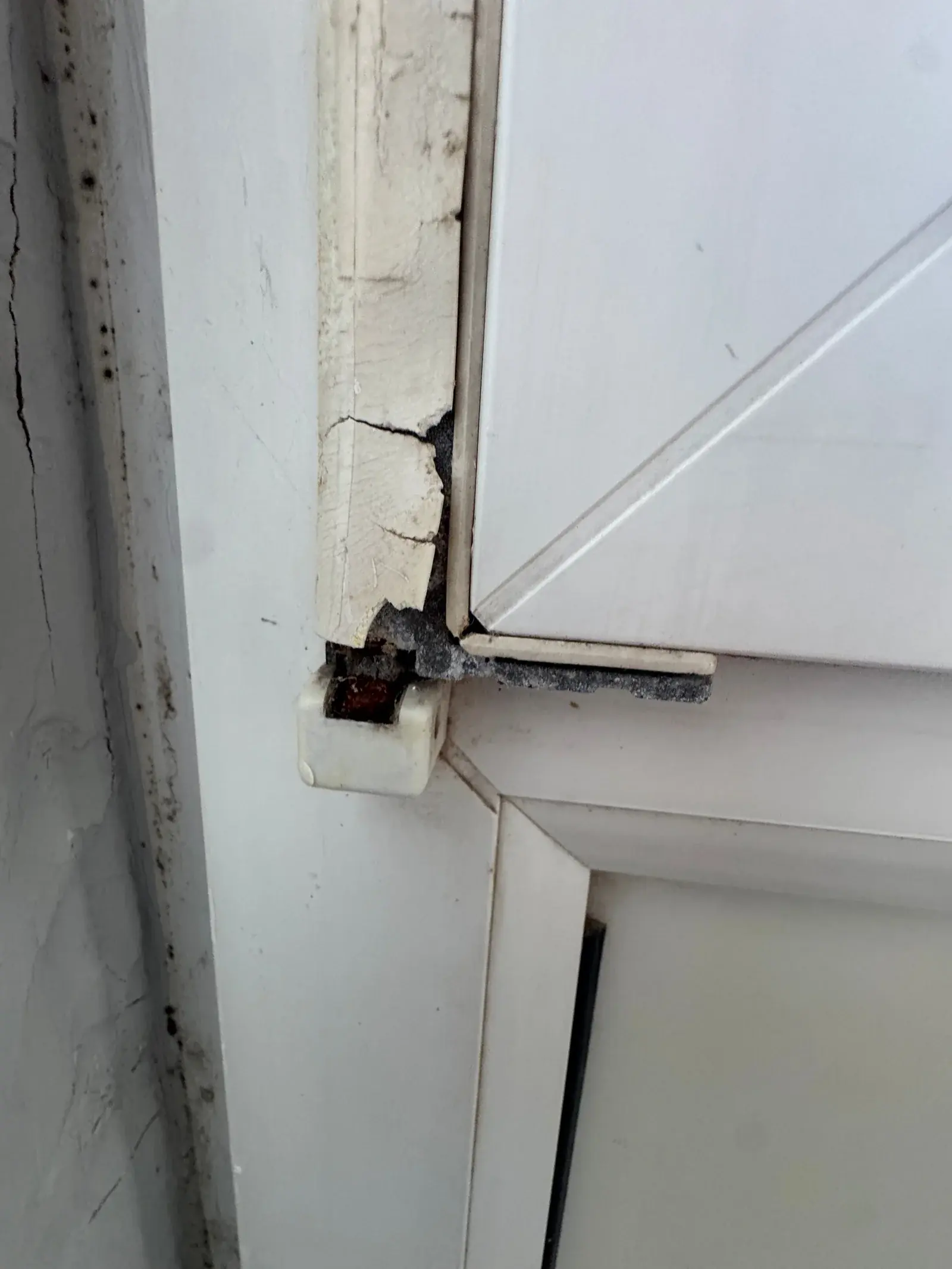
Broken door hinge cover
A broken door hinge cover exposing the metal fitting beneath.
Photographs from our survey archive.
Explore the full photograph collectionUnderstand what cannot be seen
A normal snagging visit does not open walls, remove fitted finishes or expose concealed services. Roof-space access depends on safety and the agreed scope. Ground-level views of a roof do not show every junction. Furniture and possessions can restrict visibility in an occupied home.
Electrical testing, gas safety inspection, drainage CCTV and specialist investigations are separate tasks. Drone work and thermal imaging also need an agreed scope and suitable conditions. An image of a cold area is not, by itself, proof of missing insulation.
For apartments, distinguish the individual home from the building’s shared areas and systems. An inspection of your flat is not automatically a survey of the whole block or an external-wall or fire-safety assessment.
Prepare for the appointment
Send the plot address, postcode, property size, developer’s details and any deadline when enquiring. Share the plans or specification if available, together with concerns you have already raised.
Before the visit, make ordinary access as straightforward as possible. Clear the approach to windows, cupboards and the loft hatch where safe. Do not climb into unsafe spaces or dismantle anything for the inspection. Tell the inspector about unfinished work, disconnected services or restrictions imposed by the developer.
If a problem is intermittent, record when it occurs. A dated photograph after heavy rain or a note about the weather can be useful when the symptom is not present on inspection day.
Turn the report into a repair record
Use the report’s item numbers in correspondence. Ask the developer to acknowledge receipt and respond against each item, with the proposed action and appointment date. Keep the original report unchanged and maintain a separate status list.
A simple record can use reported, response received, repair booked, repair completed and checked. A contractor attending is not necessarily the same as the original problem being resolved. Photograph the repaired area and note whether the symptom returns.
Report newly discovered issues as they arise; do not wait to compile a perfect final list. An inspection does not submit a claim or complaint for you unless that additional service has been expressly agreed.
Check deadlines in your own documents
Do not assume the whole warranty is a general snagging guarantee. NHBC distinguishes the initial builder period from later insurance cover. Your certificate and policy determine the relevant dates, cover and exclusions. Some notification windows are much shorter: the 2025 Buildmark wording contains a seven-day limit for reporting cosmetic damage. Other policies may differ.
Keep evidence of when concerns were reported. If repairs remain unresolved, follow the developer’s complaints procedure and check the appropriate warranty or consumer-code route. A technical report can support your account, but it cannot guarantee a remedy or decide legal liability.
Make a start
Use our room-by-room snagging checklist for your own observations. It is a practical organising tool, not a replacement for a professional inspection or a prescribed pre-completion checklist.
For an independent review, tell us about your new home. We confirm the scope, fee, access and expected report timing before you commit.
Official checklists and worked example
Our official document guide links directly to the NHQB house and apartment pre-completion checklists, NHBC’s new-home checklist and builder correspondence templates. It explains their different purposes and includes an original worked example of a clear defect record. These resources complement our own interactive checklist; they are not interchangeable.
Related service
A detailed inspection of a new-build home before or shortly after completion, with a full schedule of defects for the developer to put right.
About this serviceRequest a snagging survey quoteOr call 01484 218579
RICS-regulated firm no. 9317773
Free tools
Check your own property.
Sources and further reading
Reviewed 7 November 2026.